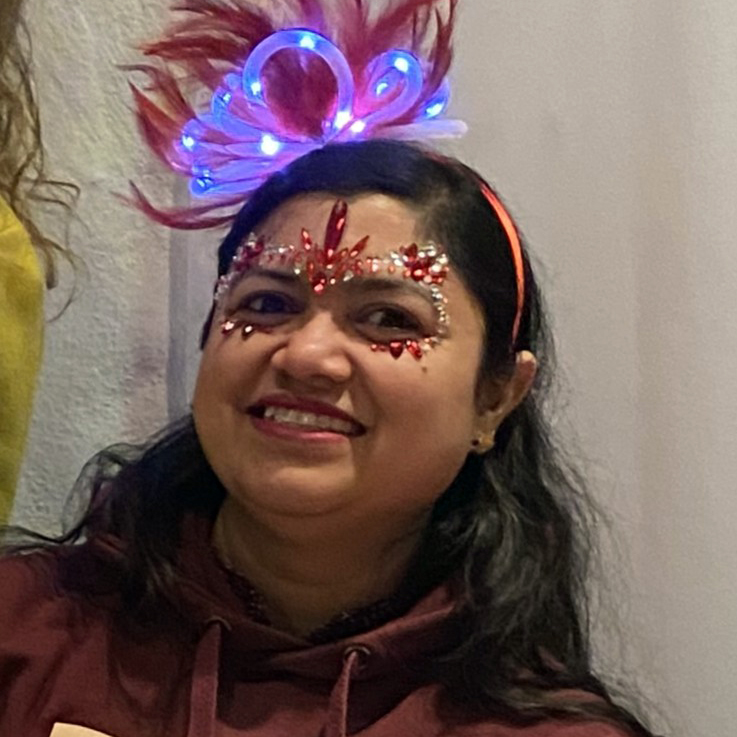
Sana Iqbal ist seit einigen Monaten Referentin für den Dialog mit dem Islam. Sie kommt aus Pakistan und hat zum ersten Mal Mainzer Fassenacht gefeiert.
Datum:
19. Feb. 2026
Von:
Eva Baillie

Fastnacht in Mainz is much more than a festival. It is a feeling. It is part of the city’s identity. For many people, it is the real „fifth season“ of the year, standing proudly next to summer, autumn, winter, and spring. During this time, the whole city changes. The streets become colourful. There is music, laughter, costumes and satire everywhere. But behind all the joy, there is also history, political awareness, responsibility, and a deep sense of community.
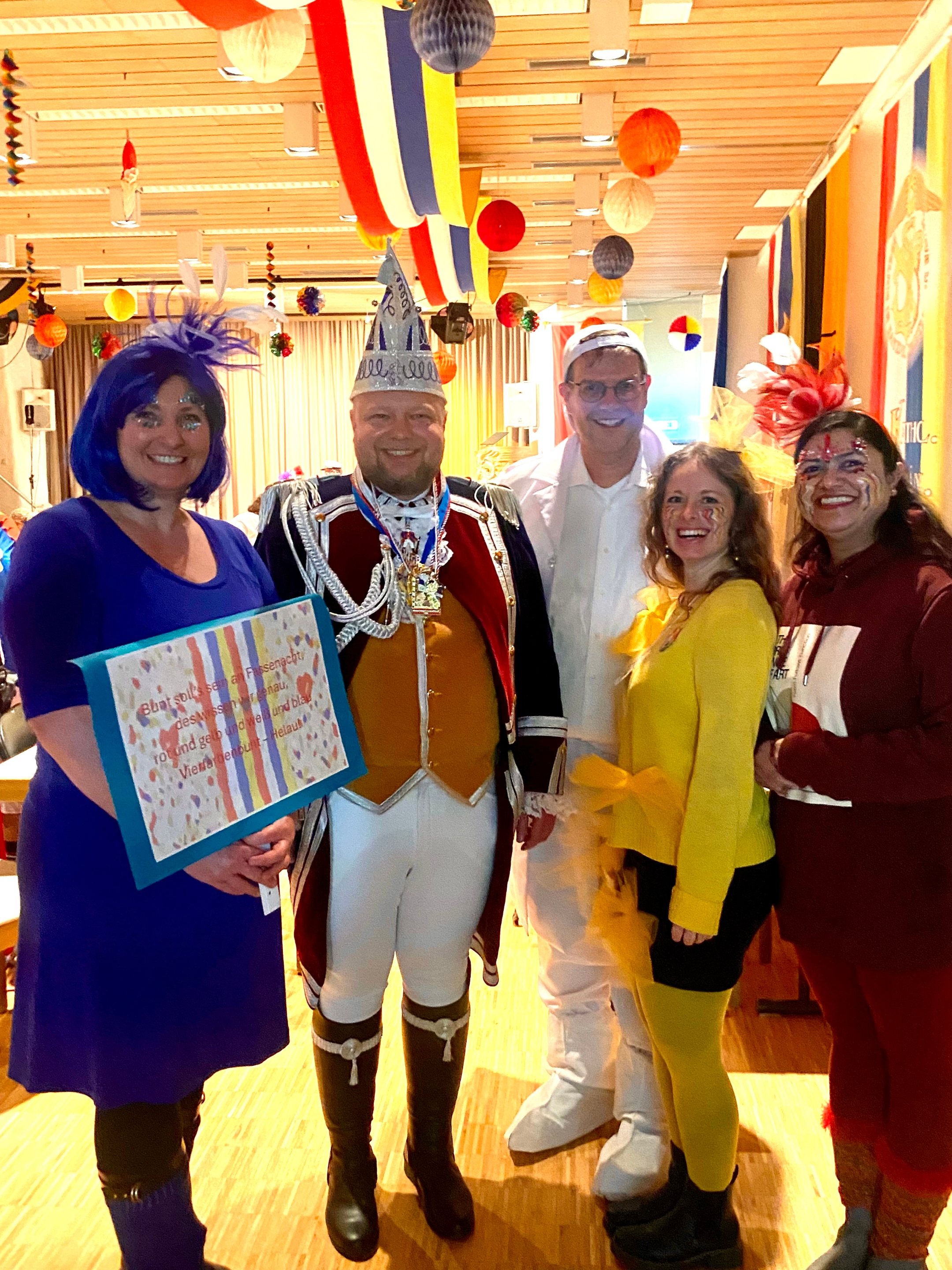
One special feature of Mainz Fastnacht is its four traditional colours: red, white, blue, and yellow. The red, white, and blue are often connected to the time of French influence in the late 18th century. The yellow stands for the Church and reminds us that Mainz has long been an important religious centre. Together, these colours show the mix of history, faith, and local pride that makes Fastnacht so unique. However, there are other interpretations as well. Some say the colors simply developed over time through different Fastnacht groups and traditions. Others believe they represent joy, diversity, and unity rather than political or religious history. There is no single explanation that everyone agrees on. In my opinion that is part of the beauty of Fastnacht. Like the celebration itself, the colors carry different meanings for different people.
Fastnacht in Mainz is huge. About 200,000 people live in the city, but during the main celebration days, almost 600,000 visitors come. The streets are full of people from near and far. It is not just a local event; it is important for the whole country. While people in Cologne celebrate “Carneval” and in Bavaria or Austria say “Fasching,” here in Mainz we say “Fastnacht.” And that word feels special. It carries history and emotion.
The Fastnacht season begins every year on November 11 at exactly 11:11 a.m. This marks the start of the “fifth season.” In the weeks before Lent, the celebrations become stronger and more intense. The highlight is Rose Monday. On this day, at 11:11 a.m., the biggest Umzug starts. It attracts hundreds of thousands of spectators. The season ends on Ash Wednesday, when Lent begins.
The Umzug follows an almost 7-kilometer route through the city centre. According to Stadtleben.de (16 February 2026), it was the largest Carnival parade in Germany this year. Around 120 different groups took part, each with its own theme, costumes, music, and decorated floats. It is impressive to see how much creativity and work go into every detail.
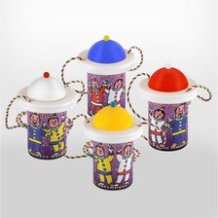
Another lovely tradition is the Zugplakettchen. The one I received from a colleague was a small three-inch bottle with a decorative cover, hanging on a string around the neck. Wearing it feels special. It is not just decoration; it shows that you are part of it. When you see many people wearing their Umzugsplakettchen, you feel this shared pride.
The four-coloured scarves, red, white, blue, and yellow, are everywhere. They keep people warm in February, but they also show identity. When thousands of people wear the same colours, the whole city looks united.
The large figures “Schwellköpp” are another highlight. These oversized heads often represent famous or political figures. They are creative, funny, and sometimes very critical—but always with a smile.
During Fastnacht, a Narr “fool” plays an important role. A Narr is anyone who takes on the role of the “fool” in the Umzug “parade”. This can be a performer, or even someone in the crowd who joins the fun in colorful costumes. The Narr, the “fool,” is the symbol of Fastnacht. But the Narr is not foolish in a negative way. The Narr speaks the truth with humour and courage. Through the Narr, society can look at itself in the mirror.
What touches me most is the warm atmosphere. It does not matter if someone has lived in Mainz their whole life or has just arrived. Everyone is welcome. A simple “Guude” (a Fastnachts’s greeting in dialect) already feels friendly and open. And when people shout “Helau!” in the streets, something special happens.
Usually, the “Helau” comes with a gesture. The right hand starts near the heart and then moves upward into the air. It feels symbolic as if the joy comes from the heart and is shared with everyone. In that moment, strangers feel connected.
One of the most unforgettable moments is standing at the Umzug. The groups walk through the streets in an organized way. Each group has its own theme and costumes. When they pass by, they shout “Helau!” and the crowd answers loudly: “Helau!” For a few seconds, thousands of people share one voice. It gives me goosebumps every time.
From the floats, sweets and toffees are thrown into the crowd. People stretch out their hands and laugh. Children and adults try to catch as many as possible. Bags fill quickly, and people joke that the candy will last all year.
I remember seeing a group carrying a decorative cannon. On it was written that it would release flowers and toffees. I loved that idea. A symbol of destruction was turned into something sweet and joyful. For me, this image shows the heart of Fastnacht: turning criticism into humour, power into equality, and history into hope.
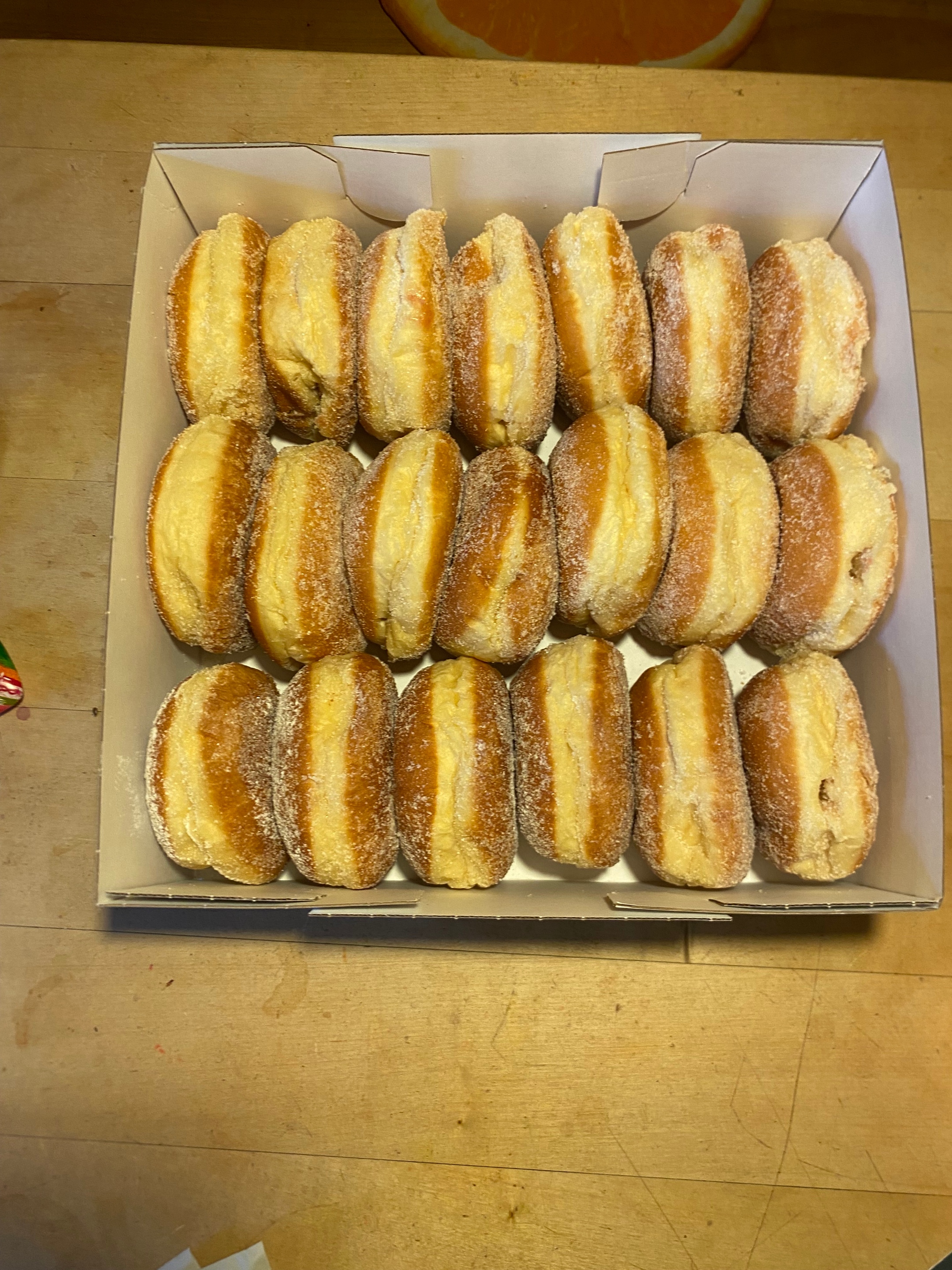
During these days, you often hear the words “Weck, Worscht, Woi.” Bread, sausage, and wine. It sounds simple, but it means sharing and being together. And of course, Fastnacht would not be complete without sweet “Kreppel”, known in other parts of Germany as “Berliner”, the soft, jam or cream-filled pastries that are enjoyed especially during the Fastnacht season. Eating, singing, laughing side by side. Social differences disappear for a while.
Behind the celebration, there is also a lot of organization. The city works hard to make everything safe. Ambulances, Red Cross teams, and first aid helpers are present. Extra garbage bins and portable toilets are placed around the city. Food stands offer local specialties. Large vehicles block the streets to protect the crowds. At Schillerplatz, an important Fastnacht celebration point, I experienced large vehicles blocking the streets to keep people safe from private cars, but when a public bus or tram needed to pass, the vehicles were carefully moved. I thought it was amazing. The balance between celebration and responsibility is remarkable. Everything looks easy and light, but it is carefully planned.
For me personally, Fastnacht has become something very meaningful. I am grateful to the people who introduced me to this tradition. Through their joy and explanations, I began to understand not only the customs, but also the spirit behind them. Because of them, I feel more “Meenzer.” I feel more at home.
Fastnacht in Mainz is joy, but also reflection. It is critique but peaceful. It is tradition but alive. Above all, it is community. It shows that joy, critique and tradition can go together. And sometimes, the strongest message is spoken with a smile and a loud, heartfelt “Helau!”